●N° 09
Kape Diem
Cultivating packaging: mycelium packaging grown on coffee and cacao by-products, for Xoko, Kape Diem’s craft chocolate from Timor-Leste.
- Ongoing
- Since 2026
- Timor-Leste
Project overview
- Status
- Ongoing
- Started
- July 2026
- Where
-
- Dili (Timor-Leste)
- Boston (United States)
- Turin (Italy)
- Programme
- Center for Design Scholar-in-Residence, CAMD, Northeastern University (“From Pod to Pack”, 2026–2027)
- Themes
-
- Biodesign
- Packaging
- Circular economy
- In collaboration with
-
- Kape Diem Coffee Lab
- Northeastern University (CAMD, Center for Design)
- BioInteractive Design Lab (Katia Zolotovsky)
- BIOARTLAB (Turin)
Xoko, chocolate from Timor-Leste
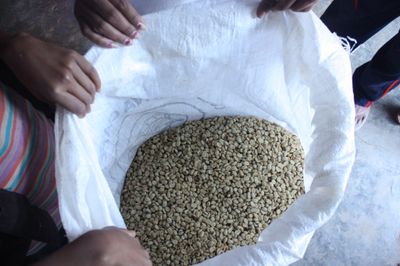
Kape Diem Coffee Lab is a specialty coffee company founded in 2019 in Dili, the capital of Timor-Leste, with a network of producers in four districts: Bobonaro, Aileu, Ainaro and Manatuto. “Kape” means coffee in the Kemak language.
Since December 2025 Kape Diem has also been experimenting with bean-to-bar chocolate, called Xoko. It has only three ingredients (Timorese cacao, cocoa butter and sugar) and is planned as 50 g bars, 65% dark, in three varieties: plain, salted almond and Timorese espresso. The cacao comes from smallholder farmers in Natarbora, in the municipality of Manatuto, and is roasted in Kape Diem’s coffee roaster.
Cultivating packaging
Chocolate fears heat and humidity: above 18–21 °C or 50–55% humidity it spoils. To protect it without plastic, IAMCLIMATE Design is developing packaging made of mycelium, the part of a fungus that grows like a network: it insulates from heat, absorbs humidity and in the end decomposes.
The mycelium (Reishi, Ganoderma lucidum) grows in 3D-printed moulds, fed with production by-products: first sawdust as a baseline, then coffee grounds and husks, and finally by-products from Timor-Leste. The goal of this first phase is a functional prototype, measured on three criteria: humidity sealing, internal temperature and structural strength.
The tests take place in two labs: the BioInteractive Design Lab at Northeastern University in Boston and BIOARTLAB in Turin, the second test site.
Five phases, from July to December 2026
-
Theoretical research and framework definition
CompletedJuly – August 2026: research on substrates and bio-materials, mapping of Kape Diem’s coffee and cacao by-products.
-
Material research and biodesign
CompletedSeptember 2026: lab training and a workshop in Northeastern University’s biodesign course.
-
Prototyping
CompletedLate September – early November 2026: 3D-printed moulds and the first mycelium growths on sawdust and coffee grounds, in three thicknesses.
-
Refinement and validation
In progressNovember 2026: tests on Timor-Leste by-products and checks of humidity sealing, internal temperature and strength.
-
Closure, submission and dissemination
To doDecember 2026: presentation of the prototype at Northeastern University’s Center for Design.
Who works on it
The project is led by Jacopo Conti (IAMCLIMATE), with Annabelle Nolan (biodesign, student in residence at CAMD), Marco Galli (engineering, Northeastern University) and Noufou Giovanni Sasso (product design). It is supported by Northeastern University’s Center for Design, Professor Douglass Scott (CAMD) for design and Professor Katia Zolotovsky (BioInteractive Design Lab) for biodesign; BIOARTLAB collaborates from Turin.