●N° 01
ARCA biodiversity project
A pilot project to promote and safeguard biodiversity in Comano.
- Ongoing
- Since 2025
- Comano (TI)
Project overview
- Status
- Ongoing
- Started
- 2025
- Funding
- CHF 15,000
- Where
- Comano (TI): Parco Prospó ↗ and three other green areas
- Themes
-
- Sustainability
- Rewilding
- Biodiversity
- In collaboration with
-
- Municipality of Comano
- Eric Vimercati
- Michele Rusca
- Canto d’Erba
In 2026 we organised two mornings open to everyone to look after these green areas, pulling up invasive neophytes. Would you like to join the next one? Sign up with the form at the bottom of the page.
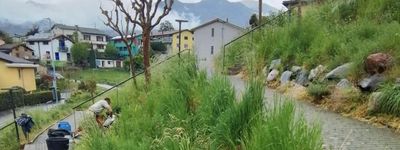
Small meadows can become a big gesture for biodiversity
The idea in brief
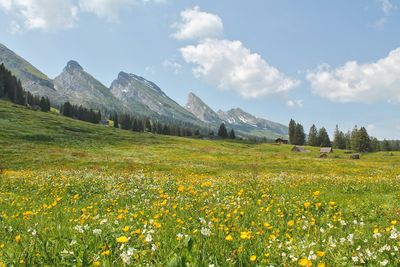
With the ARCA project, financially supported by the Municipality of Comano, IAMCLIMATE is committed to improving and safeguarding biodiversity in Comano, turning what used to be barren lawns into welcoming places for local flora and fauna. This gesture comes from the conviction that, even in heavily urbanised settings, small corners of land can come back to life and offer refuge to many forms of life.
Often seen as useless or marginal, the meadows and flowerbeds along roads or in urban areas can instead become true micro-habitats, able to host plants and animals that struggle to survive elsewhere. In these spaces nature still finds a way to express itself, spontaneously and resiliently (Pro Natura, 2024).
Biodiversity is in crisis
Biological diversity (biodiversity) is not just a natural treasure: it is also the foundation of our well-being. It covers the incredible variety of ecosystems, species and genetic resources, and it sustains vital functions such as food production, water purification, soil fertility and climate regulation. It also offers spaces of calm, beauty and inspiration.
In Switzerland, as in the rest of the world, this natural wealth is now under heavy pressure: a state of health that the Federal Office for the Environment (FOEN) considers “unsatisfactory”. Biodiversity loss is not merely an environmental problem, but also “a serious threat to our prosperity and quality of life”. Acting now to protect nature is therefore not only an ethical duty, but also a far-sighted choice (FOEN, 2017).
- 35% of the 11,000 species studied are at risk of extinctionFOEN, 2017
- Almost ½ of natural habitats are under threatFOEN, 2017
- Over 4% of European GDP: the estimated damage by 2050 from the deterioration of ecosystem servicesFOEN, 2017
The main causes include intensive land use, nutrient pollution (such as nitrogen from agriculture), the presence of invasive species and habitat fragmentation (FOEN, 2017).
Find out more: biodiversity loss in Switzerland in six charts (swissinfo.ch) ↗
An ark for nature, wherever possible
We chose the name ARCA (Italian for “ark”) inspired by the international initiative We Are the Ark (wearetheark.org), which invites citizens, organisations and communities to turn small spaces into safe havens for biodiversity. The idea is simple: wherever there is a patch of land, there is a chance to create a habitat.
The green spaces we look after may seem neglected, “untended” or messy to anyone used to perfectly mown, geometric lawns. But this apparent disorder is actually a sign of life, of variety, of ecological freedom. It is the result of a conscious choice: to stop imposing an artificial aesthetic on nature and to develop a new approach of coexistence and co-development with other living beings. A meadow left to grow at its own pace is a meadow that shelters, protects and regenerates.
With ARCA we want to set a good example: even a small area can contribute to nature conservation, if it is managed with care and vision. Our work is not only technical but also cultural: it invites us to rethink the idea of “order”, to leave room for the unexpected and to look afresh at what truly matters.
What we do, in practice
Through the ARCA project we promote ecological meadow management, based on practices that respect biodiversity. In practice:
- We mow less often so that plants can finish flowering and offer food and shelter to insects and small animals.
- We keep a minimum cutting height (10–20 cm) to protect wildlife, prevent soil erosion and limit the spread of invasive species.
- We mow with a scythe, a gentler practice that is kinder to habitats.
- Every year we keep part of the meadow in its natural state, leaving uncut strips that act as a refuge for wildlife and a reserve for plants. These areas are rotated over time to avoid permanent changes to the environment.
- We avoid any work in late autumn so as not to disturb the winter habitats of insects and small organisms.
- We adapt the timing and methods of management to the type of vegetation and the needs of the species present, supporting biodiversity even on a small scale (Pro Natura, 2024).
- We remove invasive neophytes helping native species to thrive.
Taking stock
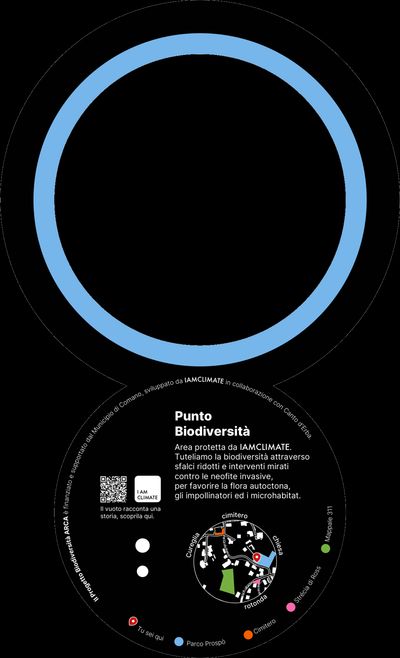
Every element of this plaque was designed to tell the story of a process as silent as it is dramatic: the loss of biodiversity. Not only through words, but also through form, material and, above all, empty space. The plaque spans time: it tells of what we had, what we are losing and what we could still lose if we do not change course.
The size of the upper circle represents the average size of the wildlife populations monitored in 1970, the reference year of WWF’s Living Planet Index. The size of the hole inside it represents the loss recorded since then: today, on average, the monitored populations have shrunk by 73% [1], so the area of the hole is 73% of the upper disc.
- −73% average decline in monitored wildlife populations since 1970WWF, Living Planet Report 2024
- −38.7% further loss estimated by 2050 if the world stays on its current trajectoryLeclère et al., Nature, 2020
The void takes centre stage
Lost biodiversity is usually invisible: vanished ecosystems, species we no longer meet and broken ecological balances can no longer catch our eye, because they no longer exist. That is why we chose to represent absence rather than presence. The hole becomes a lens through which to look at the landscape: it frames what still holds out and, precisely through what is missing, invites us to recognise the value of what remains.
The coloured ring
Inside the metal ring we have set a second, coloured ring, which represents the additional biodiversity loss estimated by 2050 (−38.7%) if the world were to stay on its current trajectory, without a decisive change in conservation policies [2]. It is not an inevitable fate, but a warning: the choices we make today will shape tomorrow’s natural world, and how much that void will keep growing.
The material
The plaque is made of aluminium, a fully recyclable, sturdy and durable material. The diameter of the outer circle cannot change: it represents the limit of the natural heritage we have received. We cannot enlarge it; we can only decide whether to let the void keep expanding or to work to shrink it. If the hole reached the edge, the frame would no longer exist: that would be the total loss of biodiversity.
Our response
The lower part of the plaque has exactly the same diameter as the hole above: our commitment must be proportionate to the loss we are living through. If the void tells of what we have lost, the shape below tells of what we choose to do: care for the biodiversity that still exists, restore degraded habitats and create the conditions for nature to flourish again.
If the void keeps growing, what will be left to see?
Projects like ARCA cannot turn back time. But they can slow the loss, restore ecosystems and give space back to life. Every meadow brought back, every native species supported and every habitat restored is a small step towards a future in which that void grows ever smaller. This plaque is not meant to be just an information panel: it tells of the past, makes the present visible and invites us to imagine the future.
We hope for a world with no need for frames around what has been lost, only biodiverse landscapes to observe in all their complexity.
Four green areas in Comano
-
1. Cemetery green area
Maintenance under way according to ecological principles.
Expertise: IAMCLIMATE
Google Maps -
2. Cà da Ronco – Plot 311
Mowing management under way with the “Canto d’erba” project.
Expertise: Michele Rusca
Google Maps -
3. Parco Prospó slope
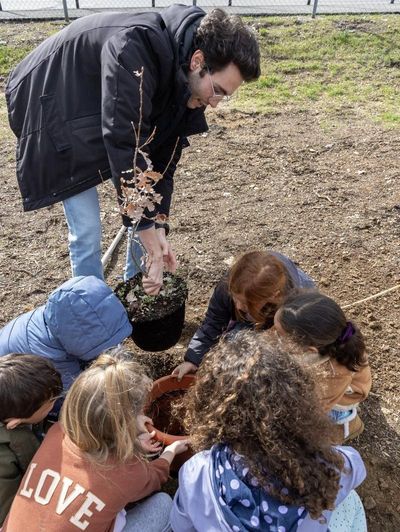
Creating a biodiversity area with the primary schools, with alternating and selective mowing.
Expertise: Michele Rusca and IAMCLIMATE (advised by Eric Vimercati)
Google Maps -
4. Strecia di Ross
Late, alternating mowing.
Expertise: Michele Rusca and IAMCLIMATE (advised by Eric Vimercati)
Google Maps
The people of ARCA
-
IAMCLIMATE
Coordination and overall responsibility
Project supervision, institutional relations and communication.
-
Michele Rusca
Project operator
Hands-on work in the field, supervision of the ecological management of the plots.
-
Eric Vimercati
Scientific consultant to IAMCLIMATE
Advice on awareness-raising activities.
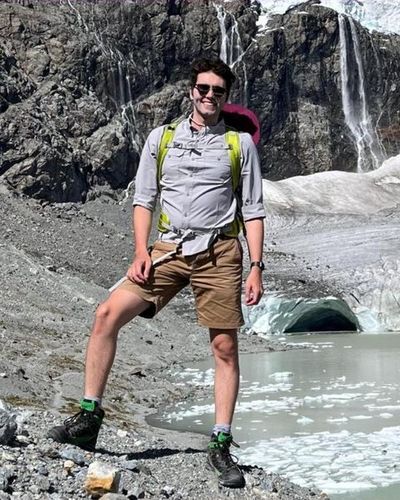
- IAMCLIMATE team
Chiara
Vice-President · Scientific supervision
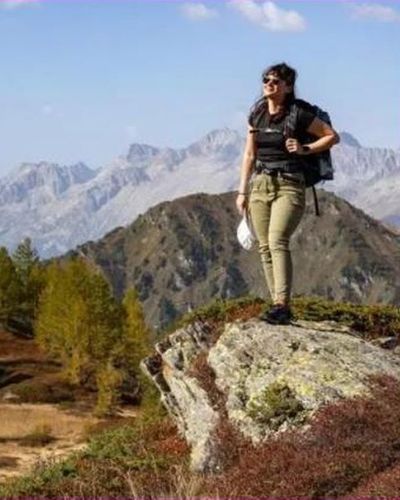
- IAMCLIMATE team
Cristiana
Content
- IAMCLIMATE team
Ludovico
President · Newsletter · Scientific supervision
- IAMCLIMATE team
Rebeca
Treasurer
- Partner
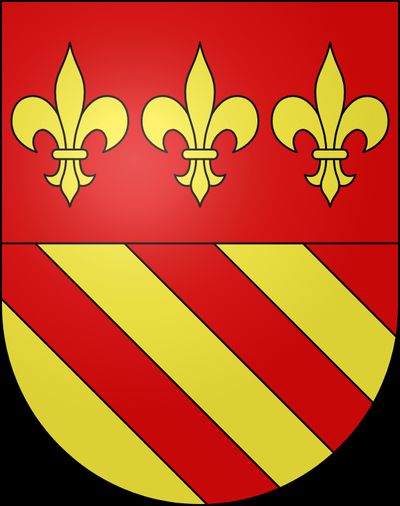
Municipality of Comano
Supports the project and provides the green areas.
- Partner
Canto d’Erba
The mowing project that manages the Cà da Ronco area.
- Partner
WWF Ticino
Works with us on the biodiversity project.
Life in ARCA
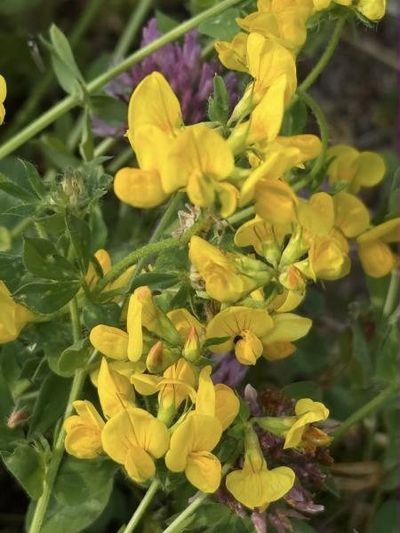
Lotus corniculatus · bird’s-foot trefoil 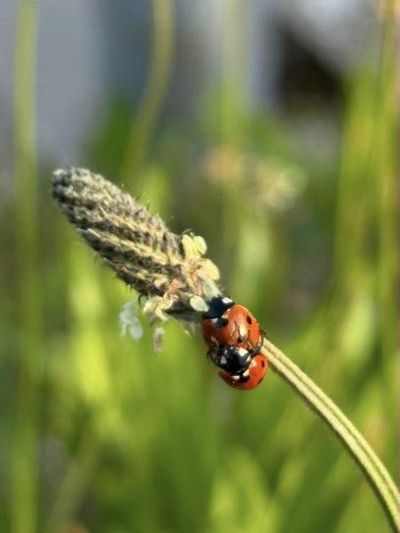
Coccinella septempunctata · seven-spot ladybird 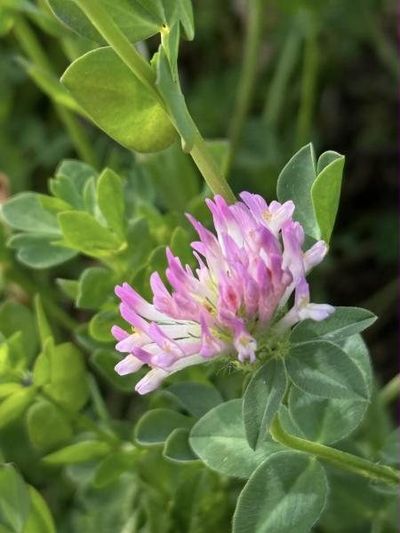
Trifolium pratense · red clover
Join the next day
Sources
- [1] WWF (2024). Living Planet Report 2024 – A System in Peril. WWF, Gland, Switzerland.
- [2] Leclère et al. (2020). Bending the curve of terrestrial biodiversity needs an integrated strategy. Nature 585, 551–556. doi.org/10.1038/s41586-020-2705-y
- Pro Natura (2024). Schede informative – Gestione ecologica delle aree verdi stradali.
- FOEN – Federal Office for the Environment (2017). Strategia Biodiversità Svizzera – Documento esplicativo.
- We Are the Ark (2024). Aims of the Ark. wearetheark.org/aims-of-the-ark